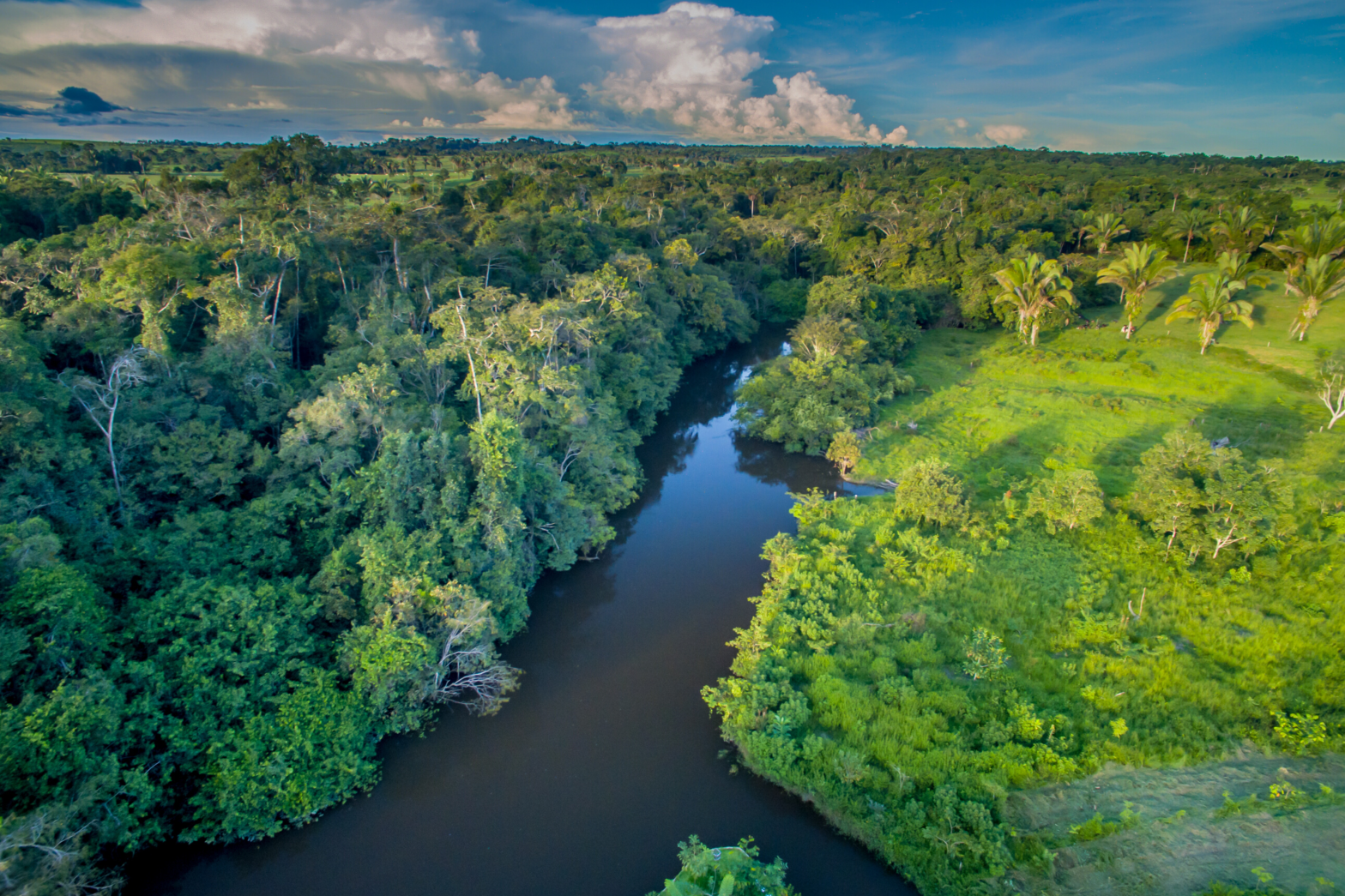
A recent study sheds light on the incredible economic opportunities presented by preserving the Amazon rainforest for Brazil’s future. By turning this natural resource into a sustainable growth engine, the country could reap substantial financial benefits in the decades ahead.
According to the findings of this recently published study, Brazil has the potential to turn the Amazon region into a true flagship of the green economy by developing sustainable industries, particularly in the solar energy sector, and adopting low-carbon agriculture. This shift could pave the way for green economic prosperity, contributing an annual sum of 40 billion reais (7.6 billion euros) to the national economy by 2050, according to the report.
This study, conducted in partnership between the Brazilian office of the World Resources Institute and the Global Commission on the Economy and Climate think tank, explored various scenarios for the economic future of the world’s largest tropical forest. These scenarios cover different perspectives ranging from the status quo to an optimal vision of zero deforestation and green growth.
By prioritising this latter approach, Brazil could not only preserve one of the planet’s most crucial carbon sinks but also make significant savings, creating an additional 312,000 jobs over the next three decades while safeguarding or restoring an estimated 810,000 square kilometres of forest, which is 1.5 times the size of France. Rafael Feltran-Barbieri, an economist at WRI Brasil and one of the 100+ contributing authors, stated: “Making the Amazon a priority would benefit all Brazilians. This model, which would make the Amazon the catalyst for decarbonizing the entire Brazilian economy, undoubtedly represents the greatest opportunity for economic and social development in the country’s modern history.”
Based on econometric techniques and models developed by various research groups in Brazil, the study revealed that 83% of the production of livestock, crops, wood, and other low-value-added products in the Brazilian Amazon, the primary drivers of deforestation, were destined for export. The region faces an annual trade deficit of 114 billion reais (21 billion euros) with the rest of Brazil and the world, according to the study’s results.
In order to reverse this trend and transition to a high-productivity, high-employment, and high-value-added economy, substantial investments of 2,560 billion reais (490 billion euros) will be required by 2050. Failure to act would cost more than double, due to damages caused by extreme weather events and other impacts of climate change, as warned by the researchers.
 Green RWA